Word of the Day & Vocabulary logo

Free daily English vocabulary

One new word a day.
A vocabulary that actually sticks.

Word of the Day & Vocabulary gives you a word of the day with real usage examples, a dictionary organized by everyday topics, and flashcards that turn reading into remembering.

2,222 words to browse A to Z or across 12 everyday topics — free to explore, no account required.

Today's word

grudging

/ˈɡɹʌ.dʒɪŋ/adjective

Given or done unwillingly, even when you know it is deserved or necessary.

Example sentences

  • “The rival coach offered a grudging nod of respect after the game.”
  • “She earned the grudging admiration of her harshest critics.”
  • “He made a grudging apology only after his mother insisted.”

Pairs naturally with praise words: grudging respect, grudging admiration, grudging acceptance. The adverb works the same way: she grudgingly agreed.
October 14, 2026See the full archive →

Every day

Word of the day

A new word each morning, with pronunciation, a plain-English definition, and a sentence that shows it in use.

Read today's word →

Browse by topic

Dictionary

Thousands of words grouped into topics like travel, work, and health — so you learn vocabulary you'll actually use.

Explore categories →

Practice

Flashcards

Flip through a sample deck right in your browser — the same recall practice that powers the app's quizzes.

Try a demo deck →

In your pocket

See the app in action

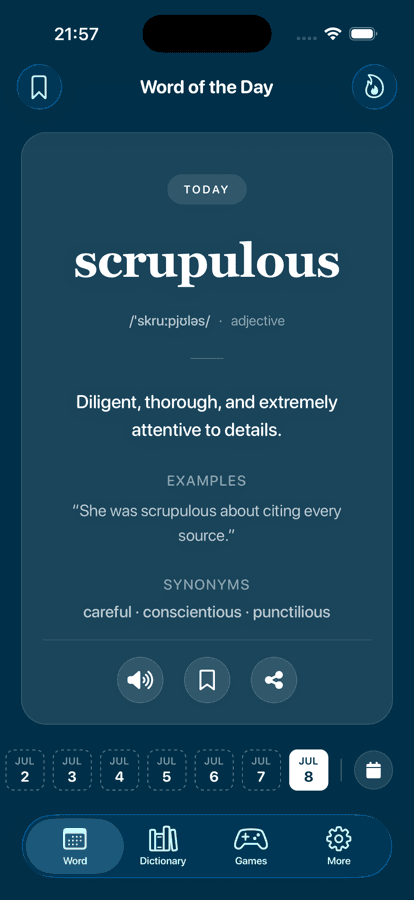
The app's word of the day screen showing the word scrupulous with its definition, example sentence, and synonyms
Word of the day
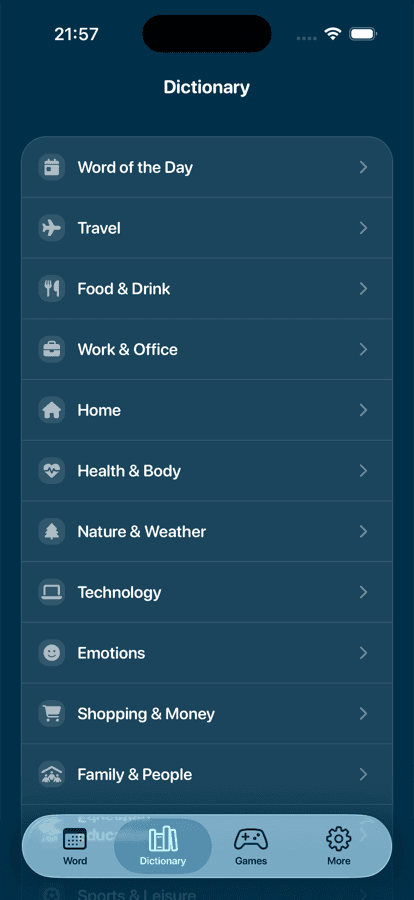
The app's dictionary screen listing vocabulary categories by topic, including Travel, Food & Drink, and Work & Office
Dictionary
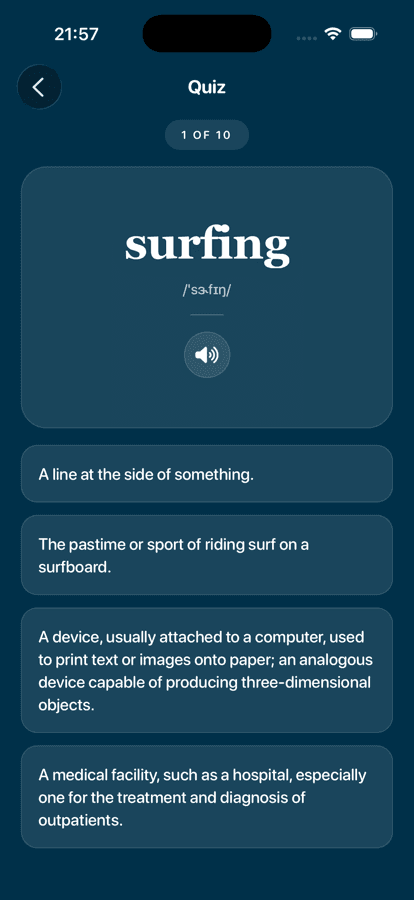
The app's multiple-choice quiz screen asking for the meaning of the word surfing with four answer options
Quizzes
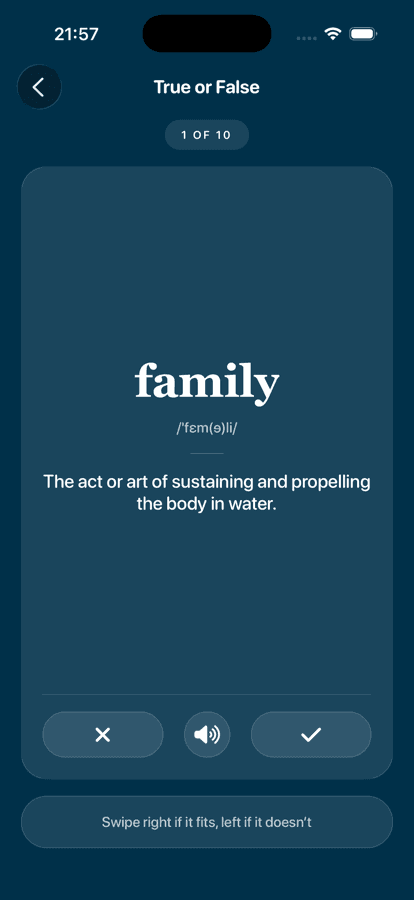
The app's true-or-false swipe game showing the word family with a definition to judge as right or wrong
Swipe games

Guides

Learn how to actually build your vocabulary

Practical guides on daily word habits, flashcards, quizzes, and topic-based learning — each one shows you how to put it to work.